1. The Questions Itself reveals a Shift in How We Look at the concept of coverage
For most of the last three decades, the debate about reaching remote and under-served regions by air has been made into a debate about the best option between satellites and ground infrastructure. With the advent of high-altitude platform stations is introducing a third option that doesn't fit neatly into either category and that's what gives the discussion its uniqueness. HAPS aren't seeking to replace satellites in general. They're competing for specific use cases where the physics of operating at 20 km instead of 500 or 35,000 kilometers can yield better results. Understanding the extent to which that advantage might be legitimate and where it's not will be the main focus of this game.
2. Latency is the area where HAPS can win Well
The duration of signal travel is determined by distance. This is where stratospheric platforms enjoy an undisputed structural advantage over other orbital systems. A geostationary satellite lies around 35,786 kilometres above the equator. It produces continuous latency of approximately 600 milliseconds. This makes it suitable to call calls without noticeable delay. This is a major issue for real time applications. Low Earth orbit constellations have improved this considerably functioning at 550 to 1,200 kilometres. They have a latency of the 20-40 millisecond range. A HAPS satellite at 20 kilometres produces latency figures equivalent the terrestrial internet. For those applications that require responsiveness (industrial control systems, emergency communications, financial transactions, direct-to-cell connectivity -- the difference in latency isn't small.
3. Satellites Win on Global Coverage and that's a Big Deal
None of the stratospheric platforms currently in use will cover the entire planet. It is true that a single HAPS vehicle has a regional footprint that is enormous in comparison to terrestrial dimensions, but limited by. To provide global coverage, you'll need a network of platforms distributed across the globe, each with its own operating system in energy, systems for power, and stationkeeping. Satellite constellations, specifically large LEO networks, are able to cover the earth's surface with an overlap ranges of cover that stratospheric facilities isn't able to replicate using current vehicle numbers. For applications that require truly universal reach -- maritime tracking, global messaging, polar coverage -- satellites remain the only option that is viable at the scale.
4. Resolution and Persistence Favor of HAPS on Earth Observation
If the task involves monitoring an area continuously - -following methane emissions through an industrial corridor, monitoring the spread of wildfires in real time or monitoring the oil pollution being released from an offshore incident The continuous close-proximity of a stratospheric base produces data quality that satellites struggle to keep up with. Satellites operating in low Earth orbit passes over every single point on the floor for minutes at time while revisit intervals are measured as days or hours depending on constellation size. A HAPS vehicle holding position above the same area over weeks gives continuous observations with sensor proximity that supports superior spatial resolution. To use the stratospheric Earth observation method it is much more important than global reach.
5. Payload Flexibility Is a HAPS Advantage Satellites Can't readily match
When a satellite is set to launch, the payload fixed. In order to upgrade sensors, swapping out communication hardware or introducing new instruments will require the launch of an entirely new spacecraft. The stratospheric platform is returned to the ground after each mission, meaning its payload can be modified, reconfigured, or completely replaced as requirements for missions change or new technology becomes available. The airship's design allows for meaningful payload capacity, enabling the combination of telecommunications signals, sensor for greenhouse gases, and warning systems for disasters on the same aircraft with the flexibility that requires multiple satellites to replicate, each with its own launched cost as well as orbital slots.
6. The Cost Structure is fundamentally different
The launch of a satellite requires cost of the rocket, insurance, ground segment development and the recognition that hardware failures on orbit will be permanent write-offs. Stratospheric platforms operate in a similar way to aircraft -- they can be recovered, inspected for repairs, then redeployed. This doesn't automatically make them more expensive than satellites on basis of coverage area, but it changes the risk profile and the cost of upgrades significantly. When operators are testing new services, or launching new businesses, the capability to access and change the platform rather taking orbital devices as sunk expense offers a significant advantage in operation especially in the beginning commercialization phases that the HAPS sector currently trying to navigate.
7. HAPS may be able to act as 5G Backhaul where satellites aren't effectively
The telecommunications system that can be facilitated by a high-altitude platform station operating as a HIBS which effectively is one of the cell towers in sky it is designed to interact with current technologies for wireless networks, in ways satellite communication didn't. Beamforming from a stratospheric telecom antenna permits dynamic allocation of signals across a coverage footprint and can support 5G backhaul earth infrastructure as well as direct to device connections simultaneously. Satellites are becoming more capable to support this technology, but the nature of operating closer to the ground offers stratospheric technologies an advantage in terms of signal quality, strength and frequency, and compatibility with spectrum allocations designed for terrestrial networks.
8. Operational and weather risk differ dramatically between the two
Satellites that are stable in orbit, are largely indifferent to weather conditions in the terrestrial. The HAPS vehicle operating in the stratosphere must contend with an operational challenge that is more complex that includes stratospheric weather patterns temperatures, as well as the engineering challenge of making it through night at altitude without losing station. The diurnal phase, which is the monthly rhythm of solar power supply and power draw at night is a design issue that all solar-powered HAPSs must be able to solve. Innovations in lithium sulfur battery energy capacity as well as the solar cell's efficiency is closing this gap, but it is an actual operational challenge that satellite operators cannot face in the same form.
9. The most honest answer is that They serve different missions.
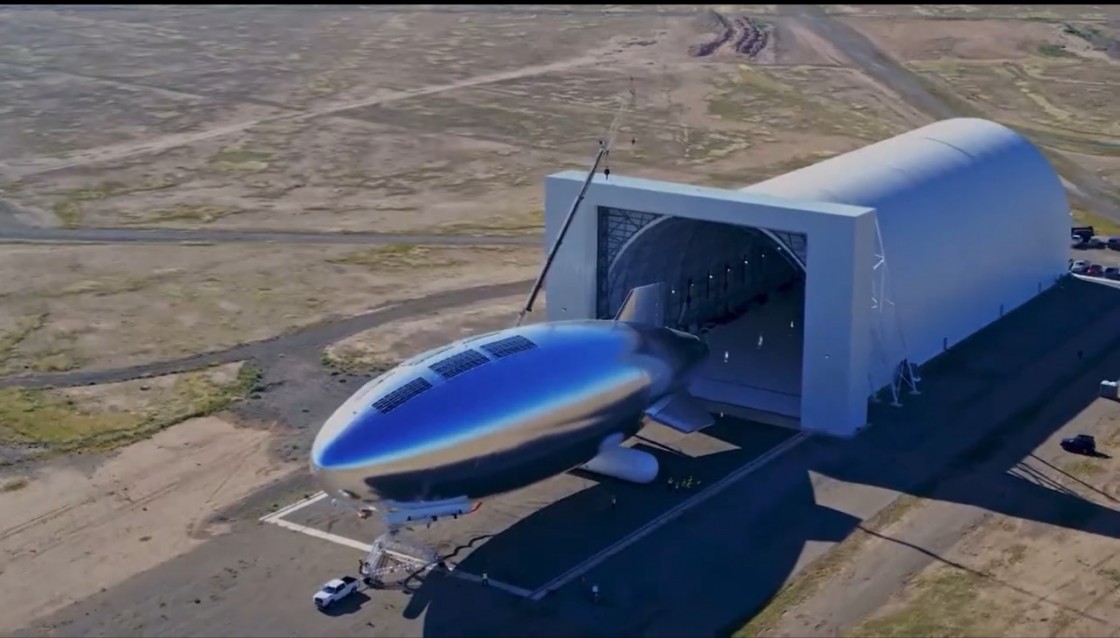
In describing satellites and HAPS as a winner-takes-all competition misreads how the non-terrestrial technology is likely grow. The more accurate picture is one of a multi-layered structure in which satellites have global reach and applications in which coverage universality trumps everything else, while stratospheric platforms serve regional persistence tasks -- connectivity in geographically challenging environments, continuous monitoring of environmental conditions in disaster recovery, and five-G deployment in areas where it is not economically feasible to roll out terrestrial networks. Sceye's location echoes precisely this idea: a system built to be able to complete tasks within a specific region for long periods of time, using a sensor and communications payload that satellites aren't able replicate at that altitude and proximity.
10. The Competition is likely to be sharper. Both Technologies
There's a reason to believe that the rise of credible HAPS programmes has accelerated the pace of innovation in satellites, and the reverse is also true. LEO operator of constellations have pushed latency and coverage density in ways that raise the standards HAPS must clear to compete. HAPS developers have demonstrated constant regional monitoring capabilities that will force satellite operators to look at the frequency of revisit and resolution for sensors. A Sceye and SoftBank partnership targeting Japan's nationwide HAPS network, with the first commercial services planned for 2026 is among the most clear indicators yet that suggests that stratospheric platforms have gone from a mere competitor into a active part in shaping how the non-terrestrial technology of connectivity and observation markets develops. Both of these technologies are better for the pressure. Read the best sceye for site info including HIBS technology, Sustainable aerospace innovation, what are high-altitude platform stations haps definition, Sceye stratospheric platforms, what are the haps, Stratospheric infrastructure, Sceye Founder, Cell tower in the sky, what haps, high-altitude platform stations definition and characteristics and more.
SoftBank'S Haps Pre-Commercial Services: What To Expect In 2026
1. Pre-Commercial is an incredibly specific and Meaningful Milestone
The language used here is important. Pre-commercial service is an exclusive phase in the development of any new communications infrastructure. They go beyond experimental demonstration, beyond proofs-of-concept flights campaigns and moving into region where users are able to receive actual service under conditions which are similar to what a commercially-oriented deployment would be. It implies that the platform is operating with a high degree of reliability, the signal is meeting quality levels that actual applications rely on, the ground infrastructure interfaces with the stratospheric telecom antenna accurately, and that the necessary regulatory permissions are in order to provide service to areas that are densely populated. Attaining precommercial status isn't something that is a marketing goal. This is a functional one, for which the reason SoftBank is publicly committing to being able to achieve it through Japan in 2026 is an expectation that the engineers on both parties of the partnership need to set.
2. Japan is the best place to try this First
It is clear that choosing Japan as the ideal location for high-end pre-commercial services doesn't come from a lack of consideration. Japan has a variety of traits which make it ideal as a potential first installation environment. The country's geography -- mountains, terrain in addition to the thousands of islands that are inhabited, long and complex coastlines -- creates genuine issues of coverage that stratospheric architecture is designed to deal with. Its regulatory environment is sophisticated enough to address the airspace and spectrum issues which stratospheric operations can raise. The existing mobile network infrastructure, operated by SoftBank, provides the integration layer that a HAPS platform needs to connect to. Furthermore, the people of HAPS have the device ecosystem and the technological literacy required to use a variety of broadband services without requiring an extended period of adoption which would slow down meaningful adoption.
3. Expect the first coverage to be focused On Underserved Areas and Strategically Important Areas
Pre-commercial deployments do not attempt to blanket the entire world at once. The more likely approach is a focused rollout targeting areas where the gap between existing coverage and what stratospheric connectivity could provide is the most obvious and where the demand for coverage prioritizing is the strongest. In Japan's context, this means island communities currently depend on expensive and restricted coverage from satellites. These include mountains, rural areas that have terrestrial network economics that have never supported adequate infrastructure, or coastal regions where disaster resilience is a priority in the national context due to the dangers of earthquakes and typhoons for the country. These regions offer the most convincing evidence of connectivity's advantages and relevant operational data to refine coverage, capacity, as well as system management prior to expanding rollout.
4. The HIBS Standard Is What Makes Device Compatibility Possible
One of the issues that anyone might ask about broadband at the stratospheric level asks if the service requires special receivers or is compatible with standard devices. For the most part, the HIBS Framework -- High-Altitude IMT Base Station -is the answer based on standards to that question. By conforming to IMT standards, which underpin 5G and4G networks globally, the stratospheric platform functioning as a high-speed base station is compatible with the device and smartphone ecosystem already in the coverage area. for SoftBank's prior-commercial services this means that users who reside in areas of coverage should be able access the stratospheric connection via their existing devices without the need for equipment -- an essential prerequisite for any service that aspires to reach the populations who live in remote areas that require alternatives to connectivity and are the least likely to spend money on specialist equipment.
5. Beamforming Determines How Capacity is Distributed
A stratospheric platform covering a vast area won't deliver uniform useful capacity across the entire footprint. How spectrum and signal energy is distributed across the coverage region is dependent on beamforming capability -- the ability of the platform to direct signals toward areas the places where demand and use are most concentrated rather than broadcasting consistently across large areas that are not inhabited. For SoftBank's commercial phase, showing that beamforming using an extremely high-frequency telecom antenna can effectively provide commercially feasible capacity to particular areas with a large coverage area will be more important than demonstrating the coverage area. The wide coverage footprint, with its thin, usable capacity shows little. Strategic delivery of genuinely accessible broadband to specific service areas proves the commercial model.
6. 5G Backhaul applications could precede Direct-to-Device Services
In certain deployment scenarios, an early and easy to verify the use of stratospheric connectivity isn't direct consumer broadband, but 5G backhaul. This is a way of connecting existing infrastructure on the ground in areas with limited terrestrial backhaul or unavailable. A remote community could have one or two ground-level network components, but it's not equipped with the high-capacity link to the larger network which makes it effective. A stratospheric platform providing that backhaul link will provide 5G coverage in communities served by existing ground systems without demanding that end users interact with the stratospheric system directly. This particular use case is more straightforward to verify technologically, offers evident and quantifiable results, and builds operational confidence in the performance of the platform before the more complex direct to device service layer is included.
7. "Edge of Sceye's Platform in 2025" sets Up What's Possible in 2026
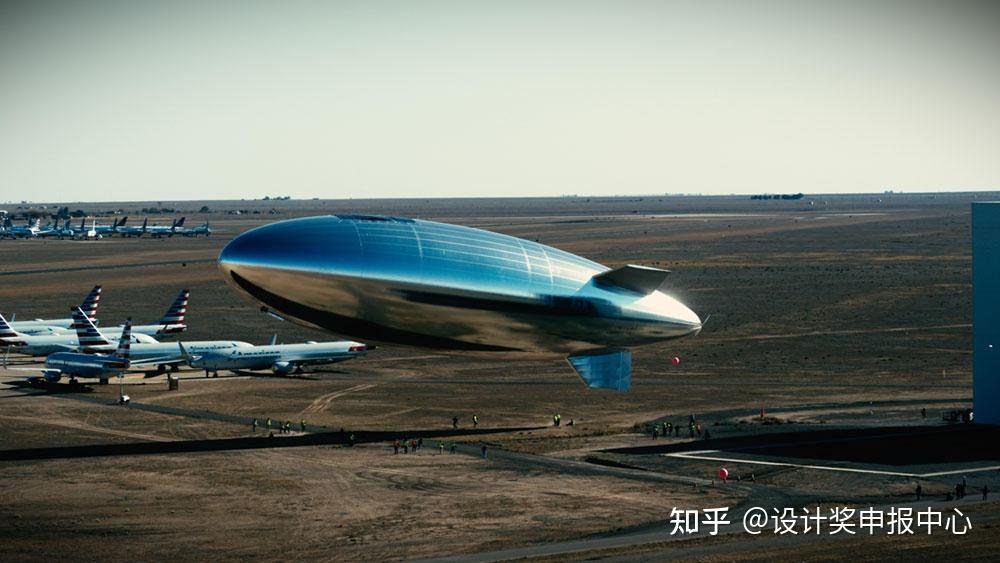
The timeline for precommercial services by 2026 depends entirely on what is achieved by the Sceye HAPS airship achieves operationally in 2025. Validation of stations-keeping, performance of payloads under real stratospheric conditions, Energy system behaviour over multiple diurnal cycles, as well as the integration testing that is required to confirm that the platform works with SoftBank's networks require maturity before the commercialization process can start. Updates on Sceye HAPS airship status until 2025 do not constitute minor announcements, but are the most accurate indicators for when the deadline of 2026 will begin in line or is accumulating the kind of technical debt that pushes commercial timelines beyond their limits. The technological progress that will be made in 2025 is the 2026 story being written ahead of time.
8. Disaster Resilience Will Be a Tested Capability, Not A Claimed One
Japan's disaster-prone nature means that any pre-commercial stratospheric services operating across the nation will almost likely encounter situations -- storms, earthquakes, disruptions to infrastructure- that determine the platform's resilience as well as its ability to function as an emergency communications infrastructure. This isn't just a matter of the deployment context. It is a single of its most valuable features. A stratospheric platform that maintains station and continues providing connection and observation capabilities in the event of significant seismic or weather event in Japan illustrates something that no test controlled by a lab can replicate. The SoftBank stage prior to commercialization will give actual evidence on how stratospheric infrastructure functions in case terrestrial networks become compromised -exactly the same evidence that other potential operators in risky countries will have to examine before making a decision on their own deployments.
9. The Wider HAPS Investment Landscape Will React to What happens in Japan
The HAPS sector is attracting meaningful investment from SoftBank and others, but the broader telecoms & infrastructure investment community remains the midst of a watchful brief. Large institutional investors, telecoms operators in other nations and governments that are evaluating stratospheric infrastructure for their capabilities and monitoring requirements are all watching what happens in Japan with considerable attention. A successful precommercial deployment -platforms on stations operations, service operational, and performances that meet thresholdsis likely to accelerate investment decisions across the sector in ways that continued demo flights and partnership announcements do not. On the other hand, significant delays or performance issues will trigger revisions to timelines across the entire industry. The Japan deployment has a significant impact in the overall stratospheric communication industry, not just this particular Sceye SoftBank partnership specifically.
10. 2026 is the year we will know if Stratospheric Connectivity Has Crossed the Line
There is a line in the evolution of any transformative infrastructure technology between the stage where it is promising and the time when it's fully realized. Mobile networks and internet infrastructures have all crossed that point at distinct times -it was not the moment when it was initially demonstrated however, it was when it was initially reliable enough that people and institutions began making plans around its existence, rather than focusing on its possibilities. SoftBank's initial commercial HAPS service in Japan are the most plausible possible scenario for the future when stratospheric connectivity crosses the line. The platforms' ability to hold station through Japanese winters, if the beamforming delivers adequate capacity to island communities, and how this service works in the types of conditions Japan normally experiences will determine whether 2026 will be considered the year when the stratospheric internet became an actual infrastructure or when the timeline was reset again. Have a look at the top SoftBank investments for site tips including softbank pre-commercial haps services japan 2026, Diurnal flight explained, marawid, Sceye stratosphere, Sceye Founder, sceye careers, Beamforming in telecommunications, Diurnal flight explained, what does haps, what are the haps and more.